The Montessori Elementary Program
Lower Elementary
Academics
Unlike traditional elementary models that teach subjects in isolation, our curriculum is an interconnected web of study sparked by the Five Great Stories. These narrative-driven lessons ignite the imagination and provide a framework for all other academic work:
The Sciences: Students explore Biology and Geography not through dry textbooks, but through hands-on research and experiments. They study the classification of the animal kingdom and the physical laws of the universe, often using our campus flora and fauna as primary sources.
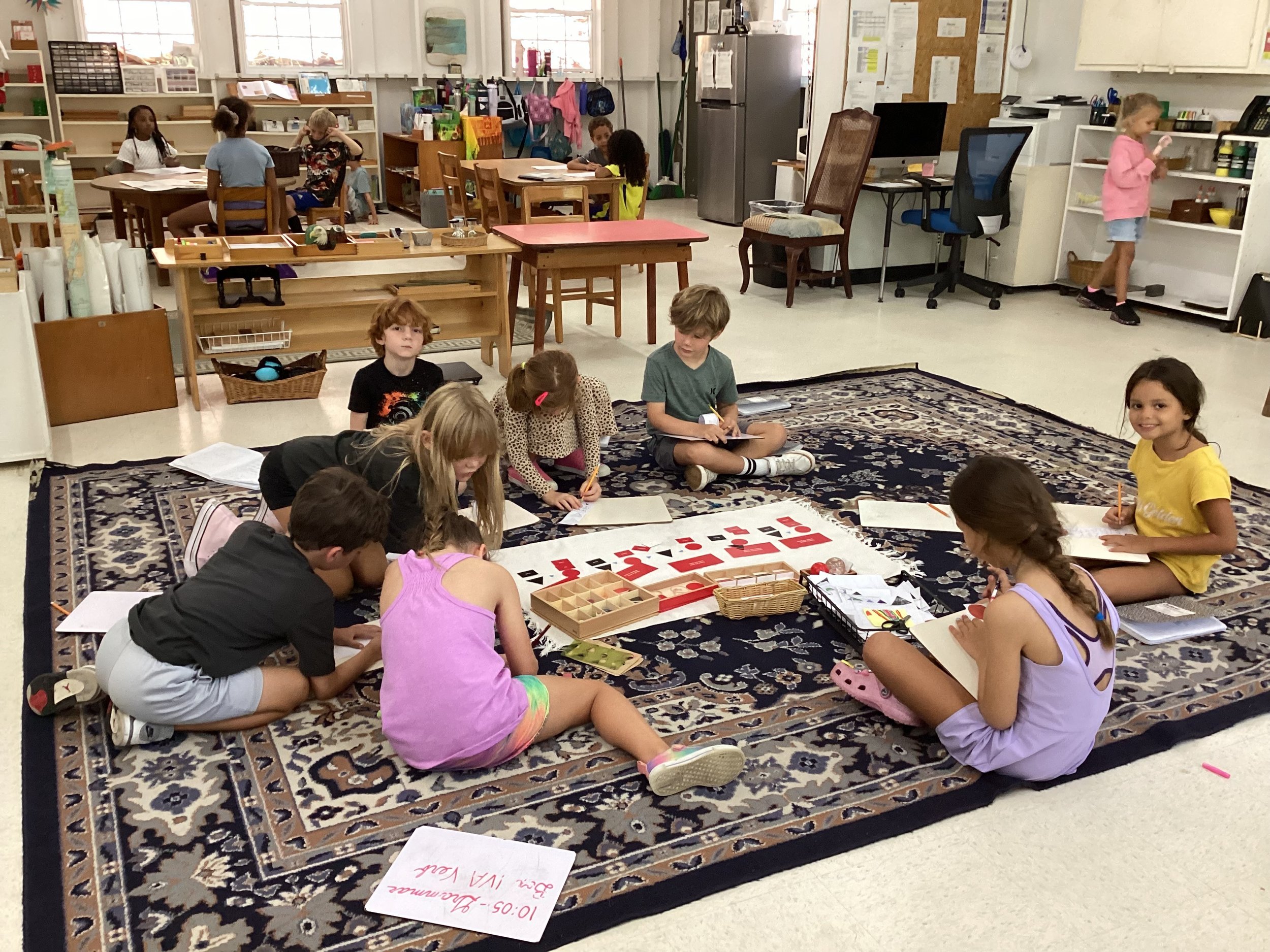
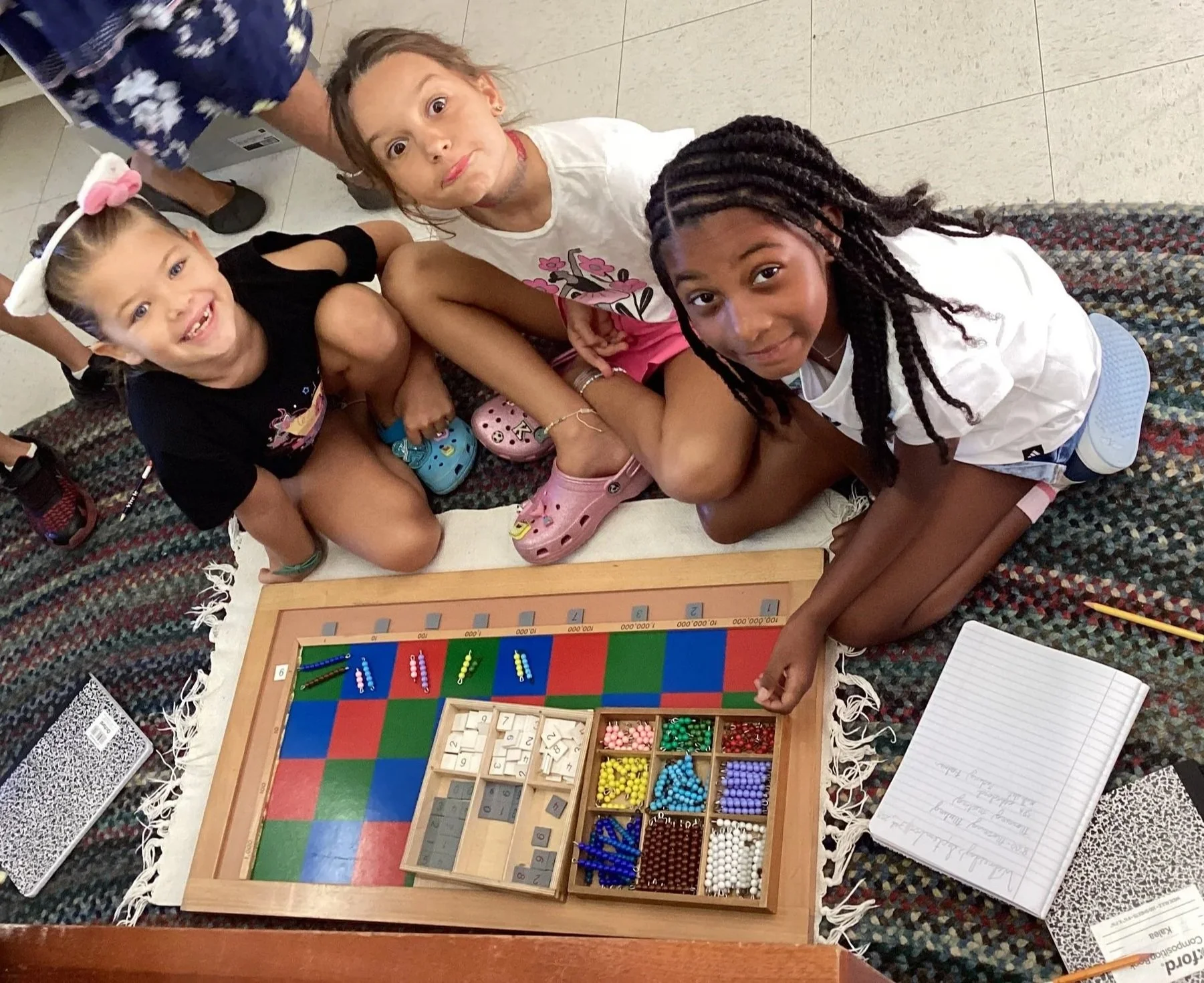
Mathematics & Geometry: We move from concrete Montessori materials toward abstract mastery. Students work with advanced manipulatives to conquer long division, fractions, and the foundations of algebra. Geometry is treated as a sensory study of space and form, linking math to the real world.
Language Arts: Language is the vehicle for all other learning. Our curriculum covers advanced grammar (using the Montessori Grammar Boxes), etymology, creative composition, and rigorous research skills, ensuring students can articulate their discoveries with clarity and confidence.
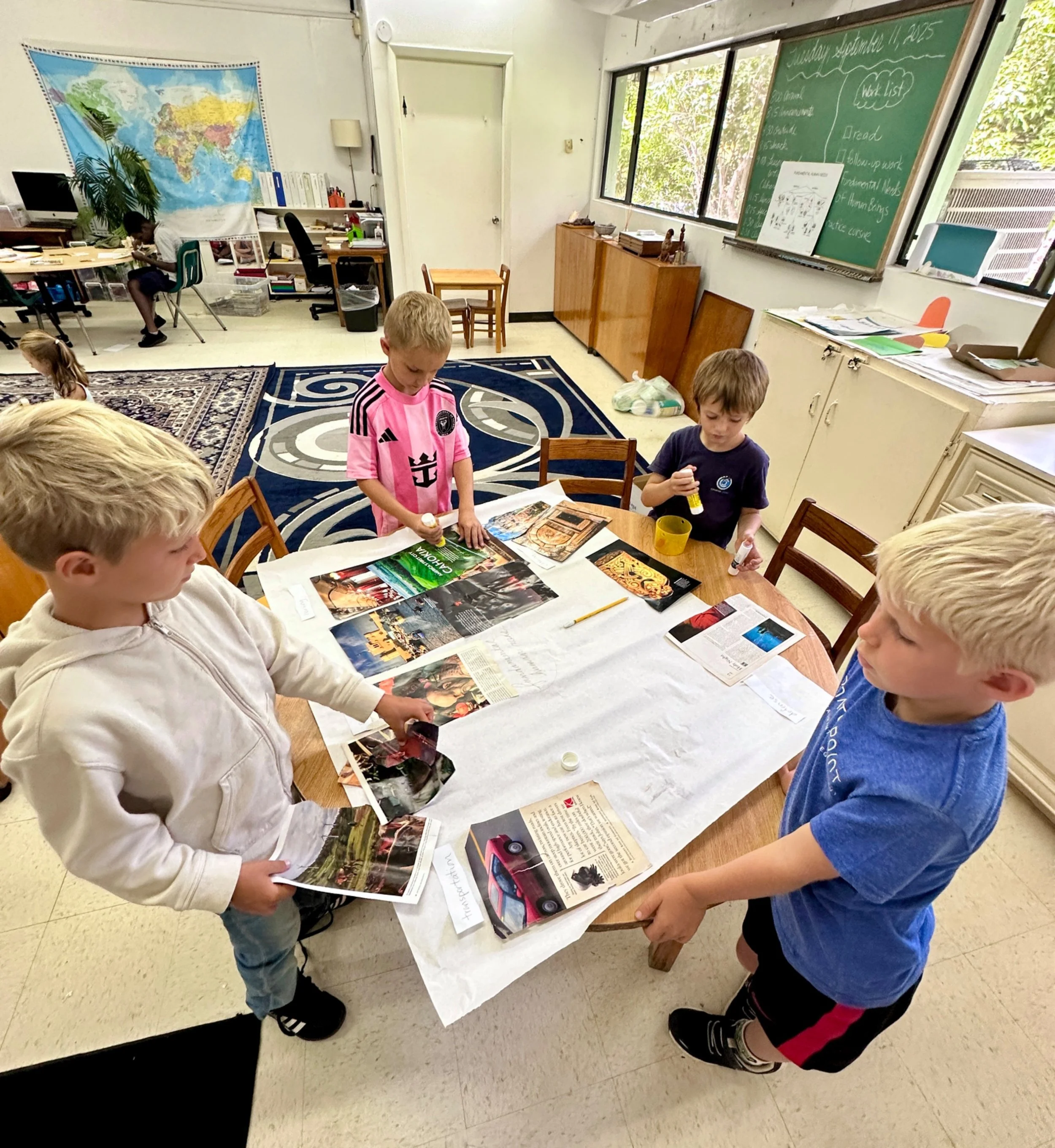
Cultural Studies & History: History is presented as the story of human ingenuity. Students examine how ancient civilizations met their fundamental needs, fostering a sense of gratitude and global citizenship.
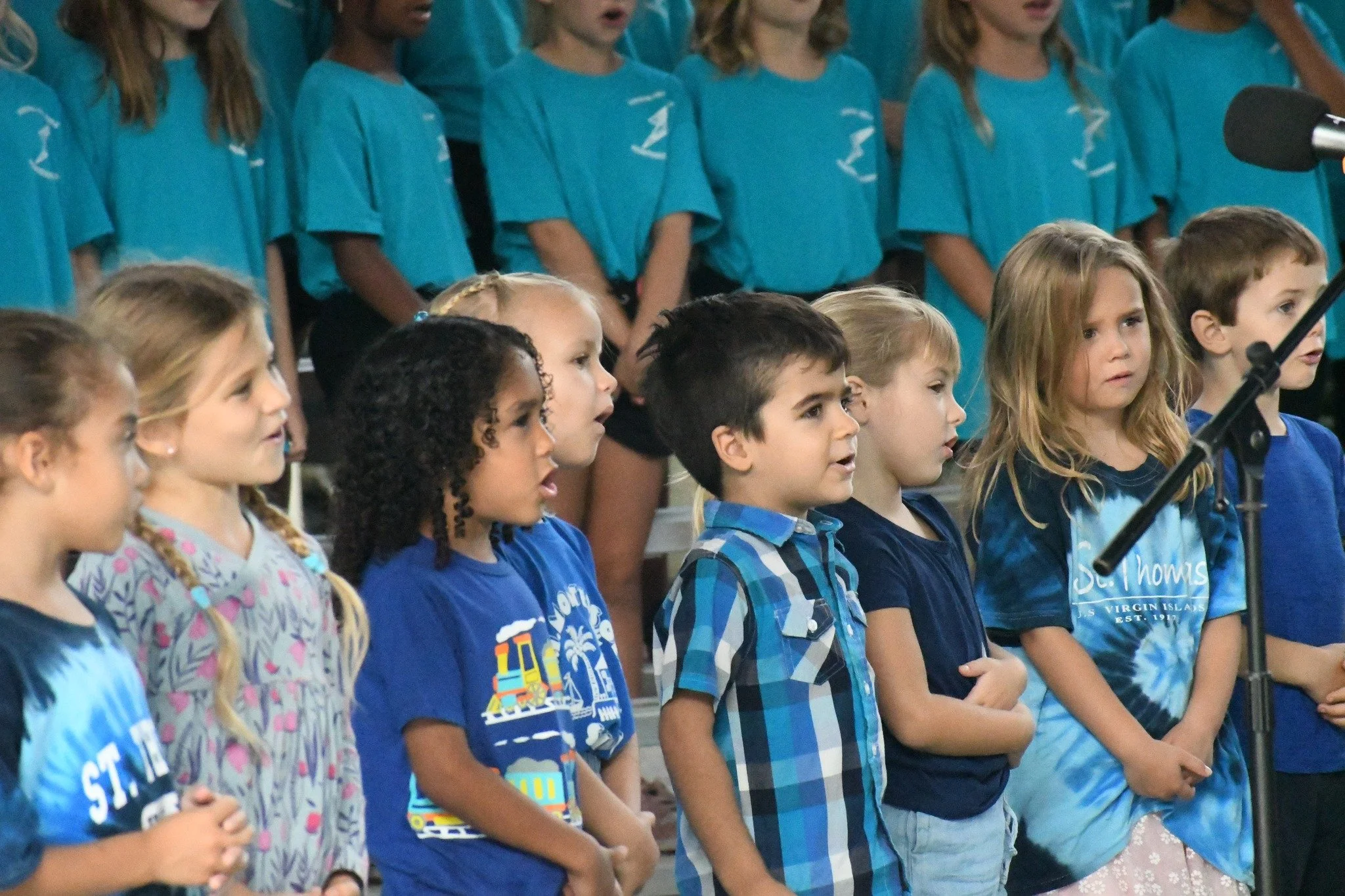
Creative Arts & Physical Health: Art and Music are woven into daily work, from learning songs to integrating technical drawing into science reports. There is a great deal of natural movement throughout the day, children may work inside or outside, at a table seated or standing. We value the connection between a healthy body and a sharp mind.
The Elementary Schedule
Our program is specifically designed to meet the social and intellectual needs of the Elementary child, focusing on peer collaboration, moral development, and big-picture thinking.
8:00 a.m. – 11:00 a.m.
Morning Montessori Work
Children are given individual and small group lessons in all areas of study by their Montessori teacher, using hands on materials.
11:00 - 11:30 a.m.
Community Lunch
Our students lunch together with the children in their classroom. Students often prepare a community snack to share.
11:45 a.m. – 12:15 p.m.
Outdoor Playtime
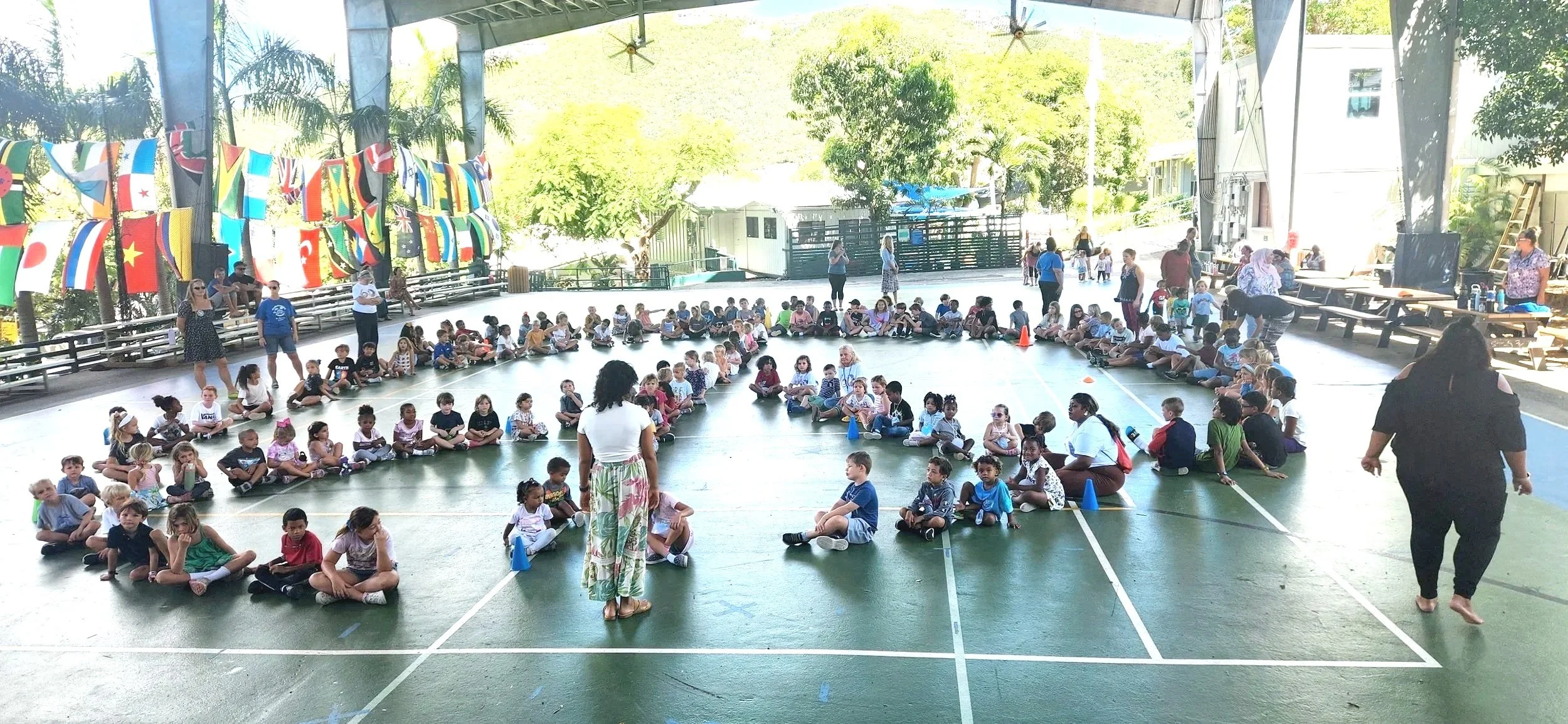
Children spend time in one of our three beautiful outdoor play spaces.
Afternoon Work Cycle
After playtime all children engage in silent or supported reading time.
12:15 - 3:00 p.m.
Our children engage in small group lessons and follow up work. Afternoons are also a time for research and outings.
Specials
Our weekly schedule includes classes in Music, Movement, Spanish and Library.
After-Care Options
Details here.
The regular day ends at 3:00pm. After-care options go until 4:30, or 5:30 p.m.
In the Lower Elementary years, the child’s curiosity shifts from "What is this?" to "How and why does the world work?" Our program transitions from the foundational activities of the Primary years into a sophisticated, fully developed academic curriculum known as Cosmic Education.
At VIMSIA, the classroom is not a boundary but a launching point. We integrate regular nature walks and outdoor scientific observation into our weekly schedule, allowing students to apply complex concepts—from botany to geology—directly to the vibrant ecosystems of the island.
Elementary Class Curriculum (Ages 6-11)
Cosmic Education, Maria Montessori’s plan for children ages six to twelve, offers a unified introduction to human knowledge and culture, guiding children to explore the universe and discover their place in it.
Cosmic Education
Language
In the Montessori approach to language, the emphasis is on communication, whether oral, written, or even nonverbal. Language is a subject of exploration in itself and is also the vehicle for the transmission of all of Cosmic Education.
Mathematics & Geometry
Montessori Elementary math fosters self-construction and autonomous discovery, introducing arithmetic, geometry, and algebra through hands-on materials. The adult’s role is to present concepts, procedures, and terminology, then allow children to explore and develop deep understanding.
A strong emphasis on geometry helps prepare children for algebraic thinking, while engaging materials let them uncover the inner workings of mathematical procedures independently.
In Montessori, history is integrated into Cosmic Education as the story of humanity’s interaction with the universe, not merely a list of events or dates. Beginning with prehistory and the development of life and early human cultures, students explore each culture’s fundamental needs, unique contributions, and positive impact on humanity, while acknowledging challenges and failures. Timelines, research, and hands-on projects help children understand and appreciate the people and achievements of the past.
History
Geography & Physical Science
In Cosmic Education, geography explores both the natural world and how humans use it to meet their needs, covering physical, political, and economic aspects as well as Earth and space science. Montessori geography also emphasizes the child’s place in the universe, including the interdependence of people and their environment. An inquiry-based approach uses a wide range of materials and experiences to engage children in discovering these concepts.
Biology
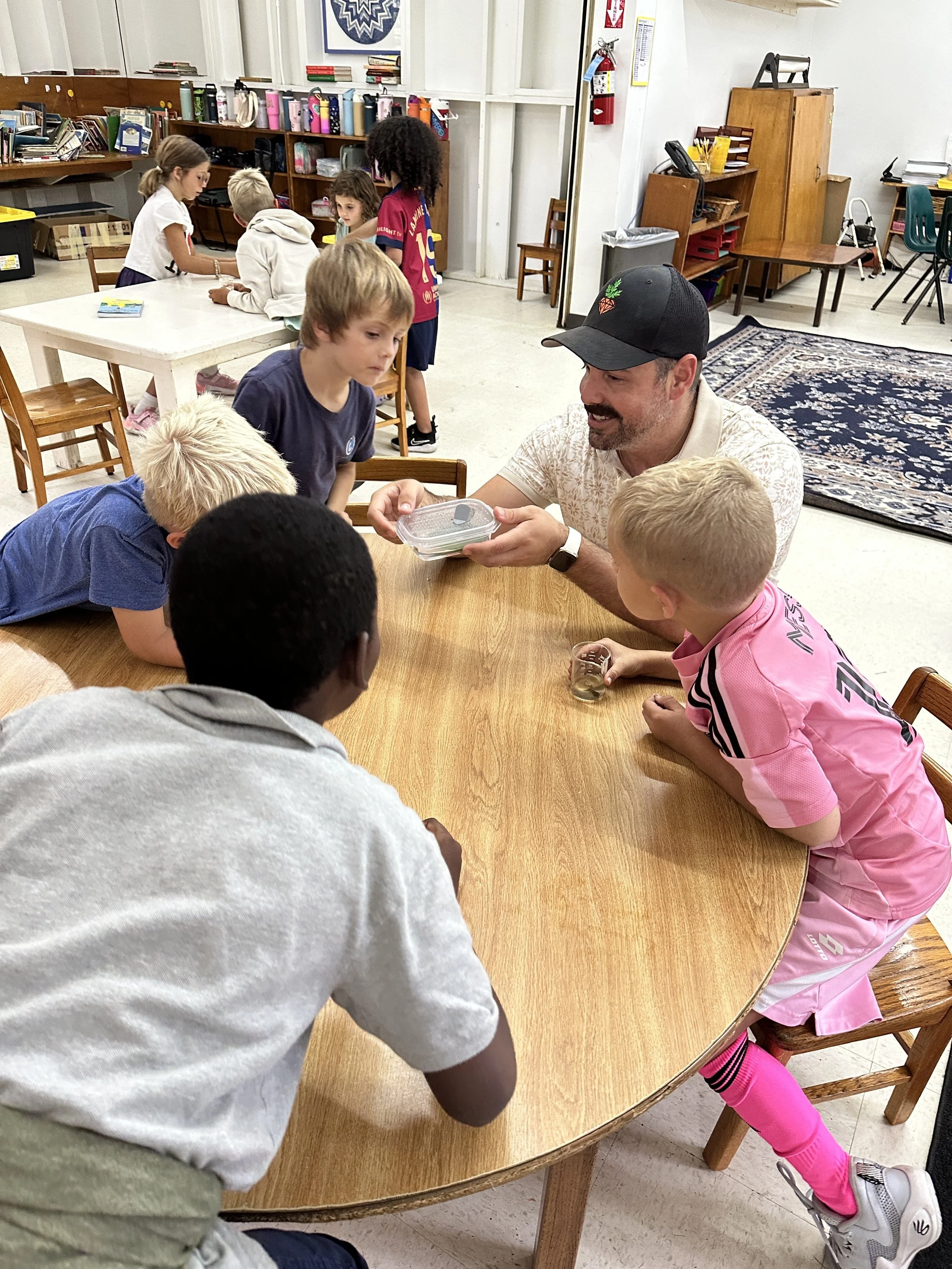
In Montessori elementary, life sciences are taught through stories of plants, animals, the human body, and ecosystems, complemented by experiments, demonstrations, and hands-on materials that encourage observation and research. Classroom plants and animals provide opportunities for detailed study, while students also learn scientific nomenclature and classification for the plant and animal kingdoms.
Art
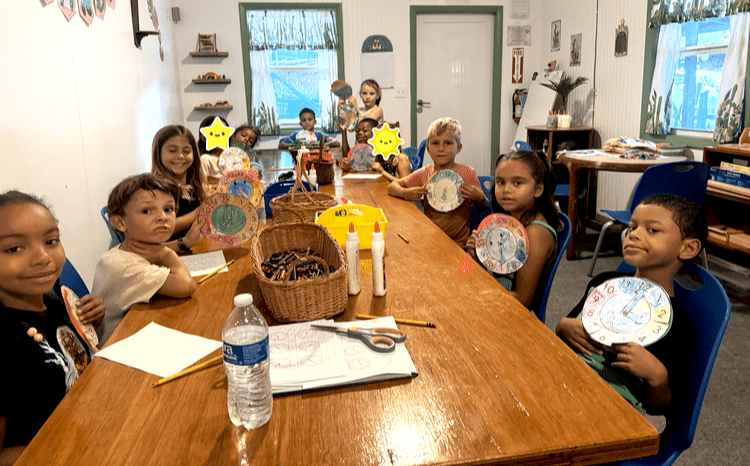
In Elementary, the foundation of art from the Primary years expands as children gain competence and explore new media, often integrating art into other areas of work. They may design sets for an original play, knit a shawl as a gift of care, or study Chinese calligraphy to deepen cultural exploration. Lessons also include art history and appreciation, encouraging both creative self-expression and recognition of art as a meaningful gift in the world.
In the Montessori Elementary program, music expands to include theory, self-expression, and appreciation, while building on singing, percussion, and listening across genres. The Tone Bars introduce children to the “language” of music through ear training, composition, theory, movement, and appreciation, and, together with the Moveable Alphabet of Music, help them learn notation and create their own compositions. As they grow, children often take joy in performing vocal and instrumental music, especially when preparing pieces for school liturgies and community events.
Music
Elementary students take part in physical education twice a week, engaging in a variety of sports, games, exercises, and activities throughout the year. Beyond these structured classes, children often choose their own physical activities during the daily work period, whether practicing yoga, juggling, or playing hopscotch in the hallways, making movement a natural part of their school experience.
Physical Education