The Montessori Primary Program
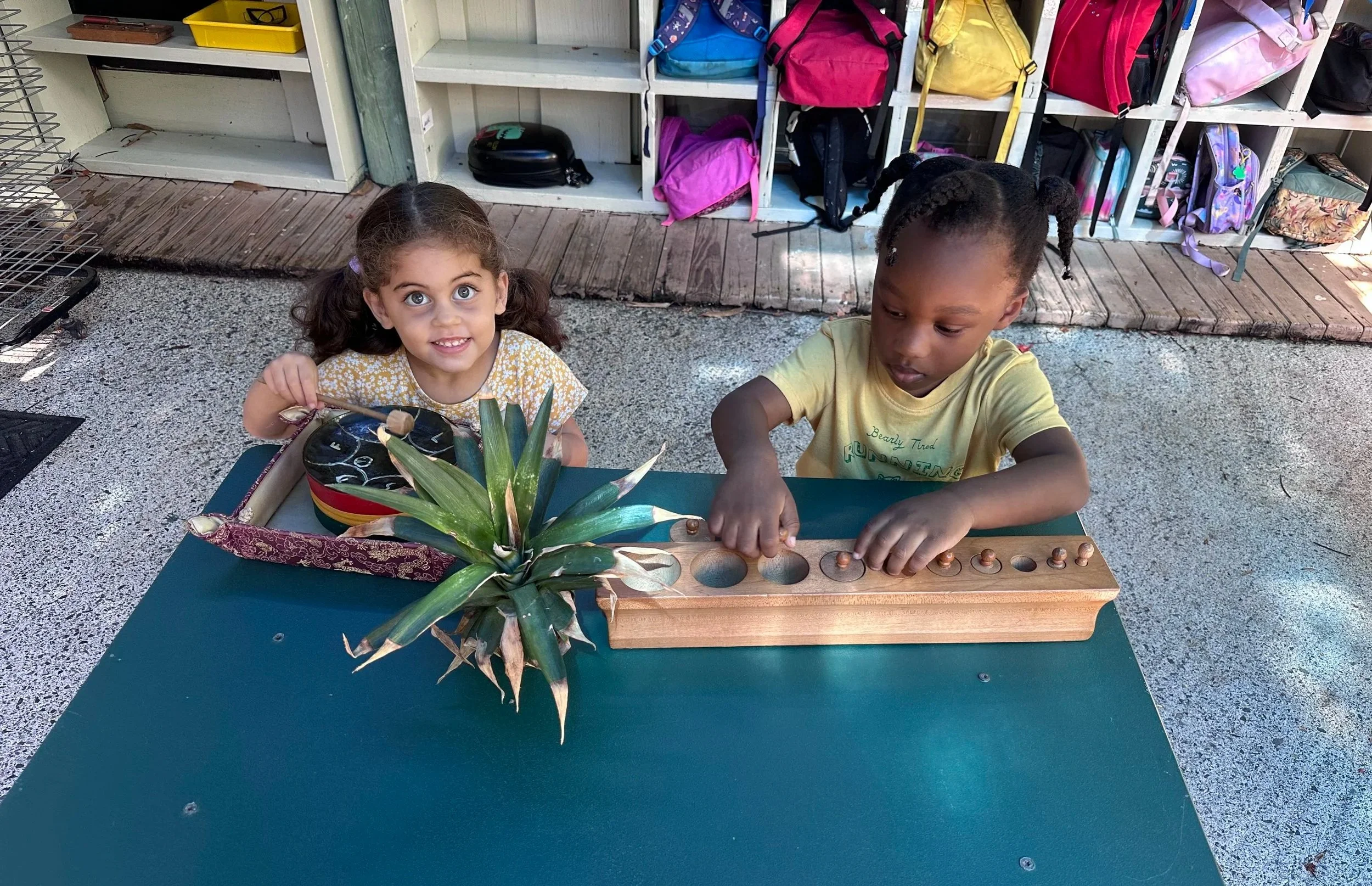
Our Montessori Primary program is a comprehensive educational environment designed to honor the "absorbent mind" of children aged three to six. Unlike traditional preschools, our Primary classroom is a rigorous academic community where children engage with a sophisticated, holistic curriculum that transcends basic childcare. The outdoors serves as an extension of the curriculum utilizing the island's unique flora and fauna as a living laboratory to study biology, ecology, and the cycles of the natural world.
The Five Pillars of the Primary Curriculum
Our curriculum is divided into five distinct areas of study, each utilizing specialized Montessori materials that move from the concrete to the abstract:
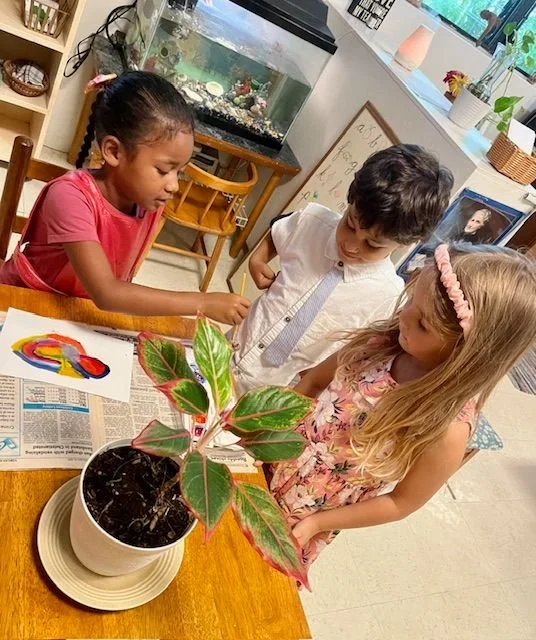
Practical Life: These activities help children develop coordination, concentration, and independence. Students learn "real world" skills such as food preparation, plant care, and Grace and Courtesy, which build a sense of responsibility and self-worth.
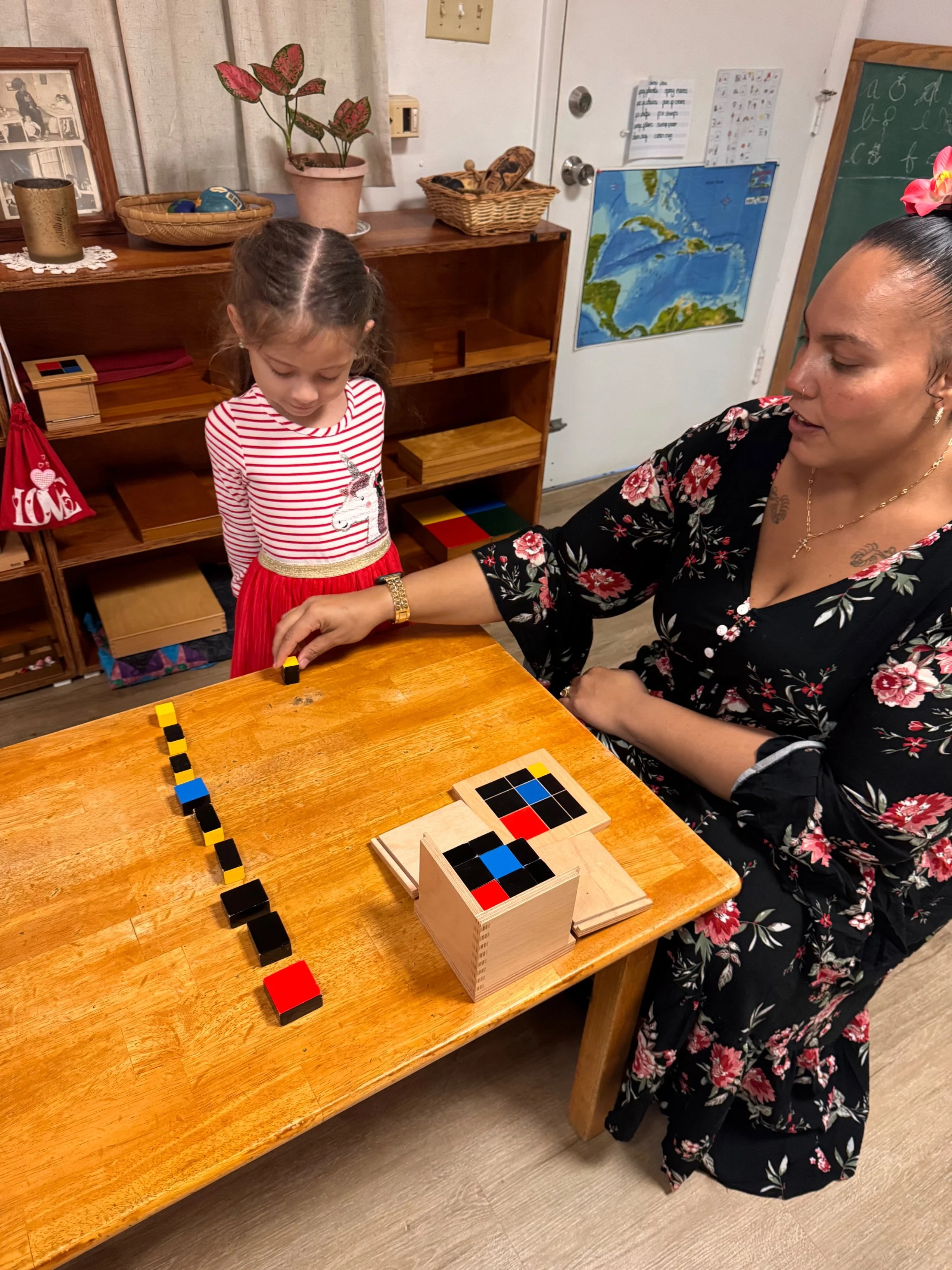
Sensorial: Designed to sharpen the five senses, these materials allow children to categorize and organize their sensory input. By exploring dimensions, colors, textures, and sounds, they build the mathematical and logical foundations necessary for future learning.
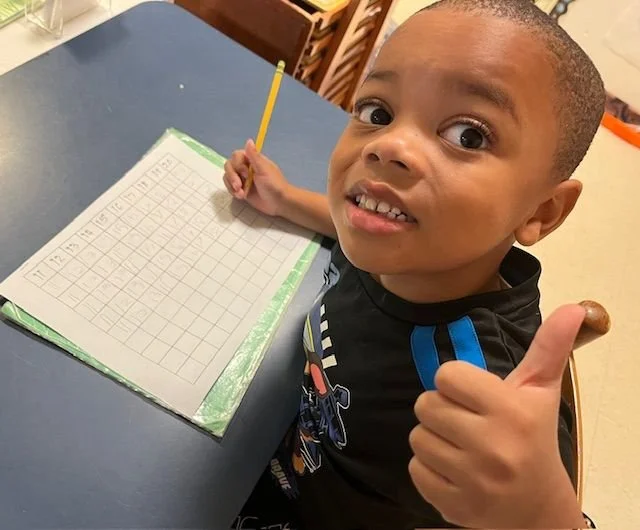
Language: Our phonetic-based approach transitions children from spoken language to writing and, ultimately, reading. The environment is rich with opportunities for vocabulary development, storytelling, and self-expression.
Mathematics: Using beautiful, hands-on materials like the Golden Beads, children internalize the concepts of number, quantity, and the decimal system. They don't just memorize formulas; they "feel" the value of numbers through tactile experience.
Cultural Studies: This broad area encompasses Geography, History, Botany, Zoology, and Science. Children explore the diversity of our global community and the wonders of the natural world, fostered by our frequent outdoor explorations across the campus.
Program Structure & Continuity
The Primary program is a multi-age "family" unit, allowing older students to mentor younger peers, which reinforces their own mastery and builds social leadership.
8:00 a.m. – 11:00 a.m.
Morning Montessori Work
Children are given individual and small group lessons in all areas of study by their Montessori teacher, using hands on materials.
11:00 a.m. – 11:30 a.m.
Outdoor Time
Children spend time in one of our three beautiful outdoor place spaces.
11:00 - 11:30 a.m.
Community Lunch
Our students lunch together with the children in their classroom.
Extended Day (ages 3 - 4)
Children rest and sleep on cots for the afternoon, following American Pediatrics Guidelines for nap.
12:00 - 2:00 p.m.
Montessori (age 5)
Our children of Kindergarten age engage in a 2nd cycle of work in the Montessori classroom.
2:30 - 3:00 p.m.
Specials
Children of Kindergarten age engage in Spanish, Music, Library and Movement class.
The regular day ends at 3:30. Sparklette after school options go until 4:30, or 5:30 p.m.
After-Care Options
Details here.
In the Primary classroom, we don't just teach subjects; we follow the child's natural drive toward competence. This fully developed curriculum ensures that your child is actively constructing their own intellect and character.
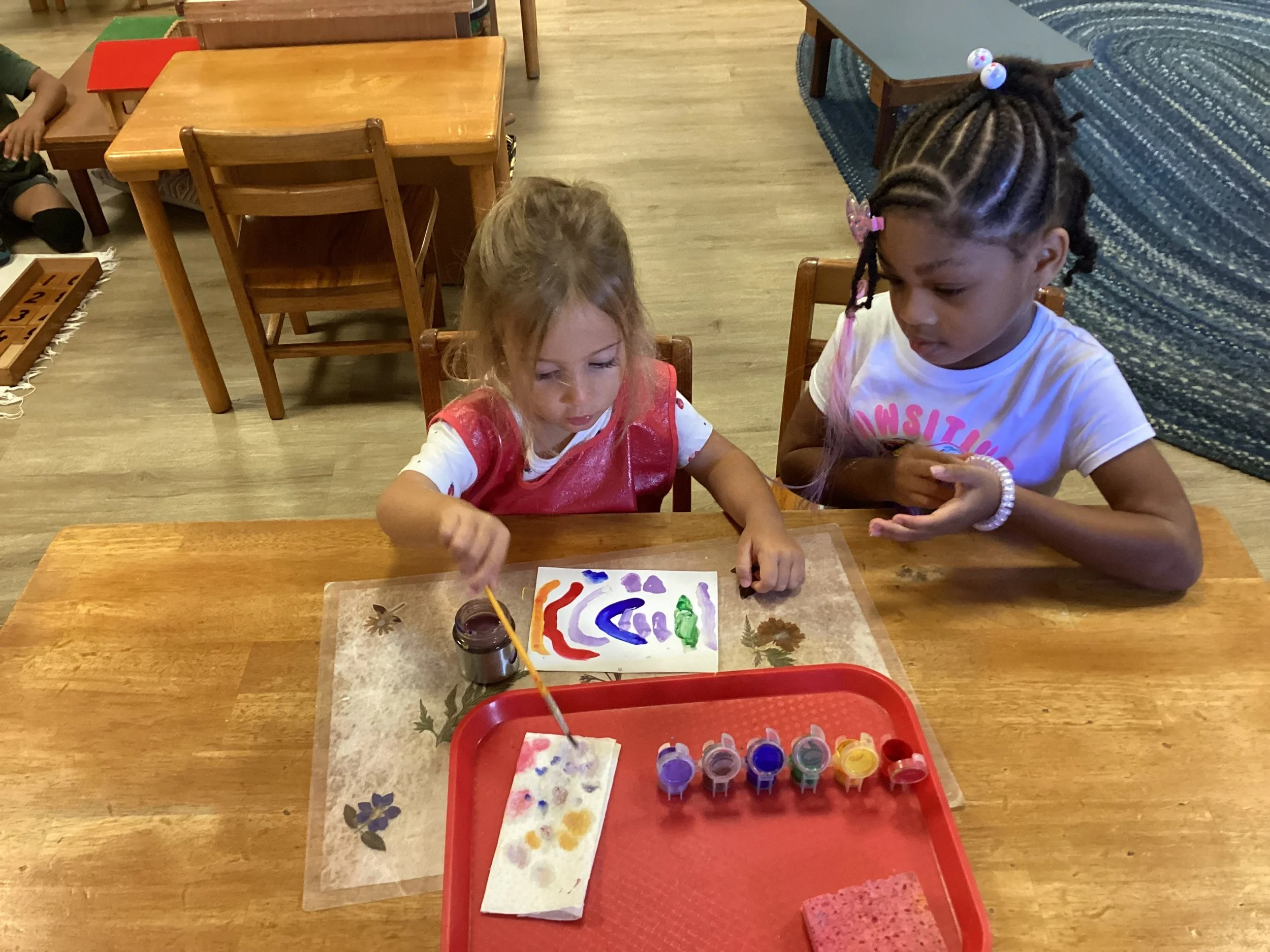
Practical Life
Practical Life encompasses the everyday activities through which we care for ourselves, our environment, and our relationships, such as cleaning, preparing food, or brushing teeth. In the Montessori classroom, this area meets the developmental need of the 3–6-year-old child, who is eager to participate in real-life tasks and to learn independence.
Activities like table washing, polishing, preparing snacks, and arranging flowers engage both body and mind, appealing to the child’s love of sequence and logical order.
Through this work, children develop concentration, coordination, fine and gross motor control, and the independence necessary for further learning.
Practical Life also helps children adapt to their culture by mastering meaningful life skills, such as buttoning, while cultivating accuracy and logical thinking that support early math skills. As the first area introduced in Montessori, it forms the foundation for all later work in the classroom.
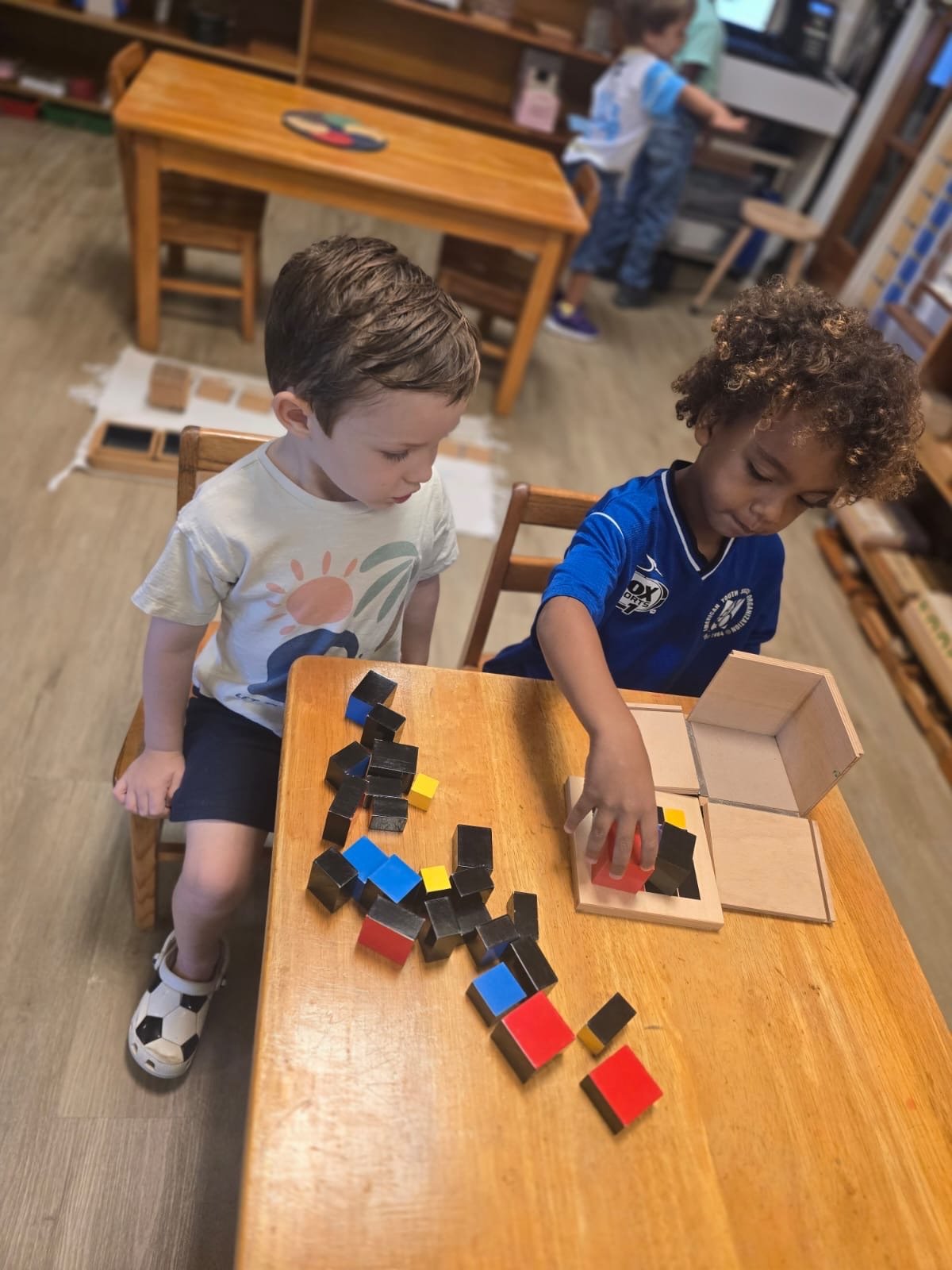
Sensorial
From birth, children absorb impressions through their senses, naturally refining them to gain a deeper awareness of their surroundings. Montessori sensorial materials support this refinement by clarifying sensory input and allowing exploration of qualities such as color, texture, sound, shape, dimension, and size.
Because young children have a natural tendency to sort and classify, these sensorial experiences provide concrete foundations for building intellect and later abstract thought.
Through this work, children move from broad classifications to finer distinctions, developing precise concepts, comparisons, and judgments. While sensorial materials do not hasten abstraction, they strengthen the connection between the concrete and the abstract by giving children clear mental pictures.
Between birth and age five—a sensitive period for sensory refinement—children eagerly explore the world with their whole bodies, and the foundations laid through sensorial work prepare them for the shift toward abstraction, imagination, and more advanced classification.
Language
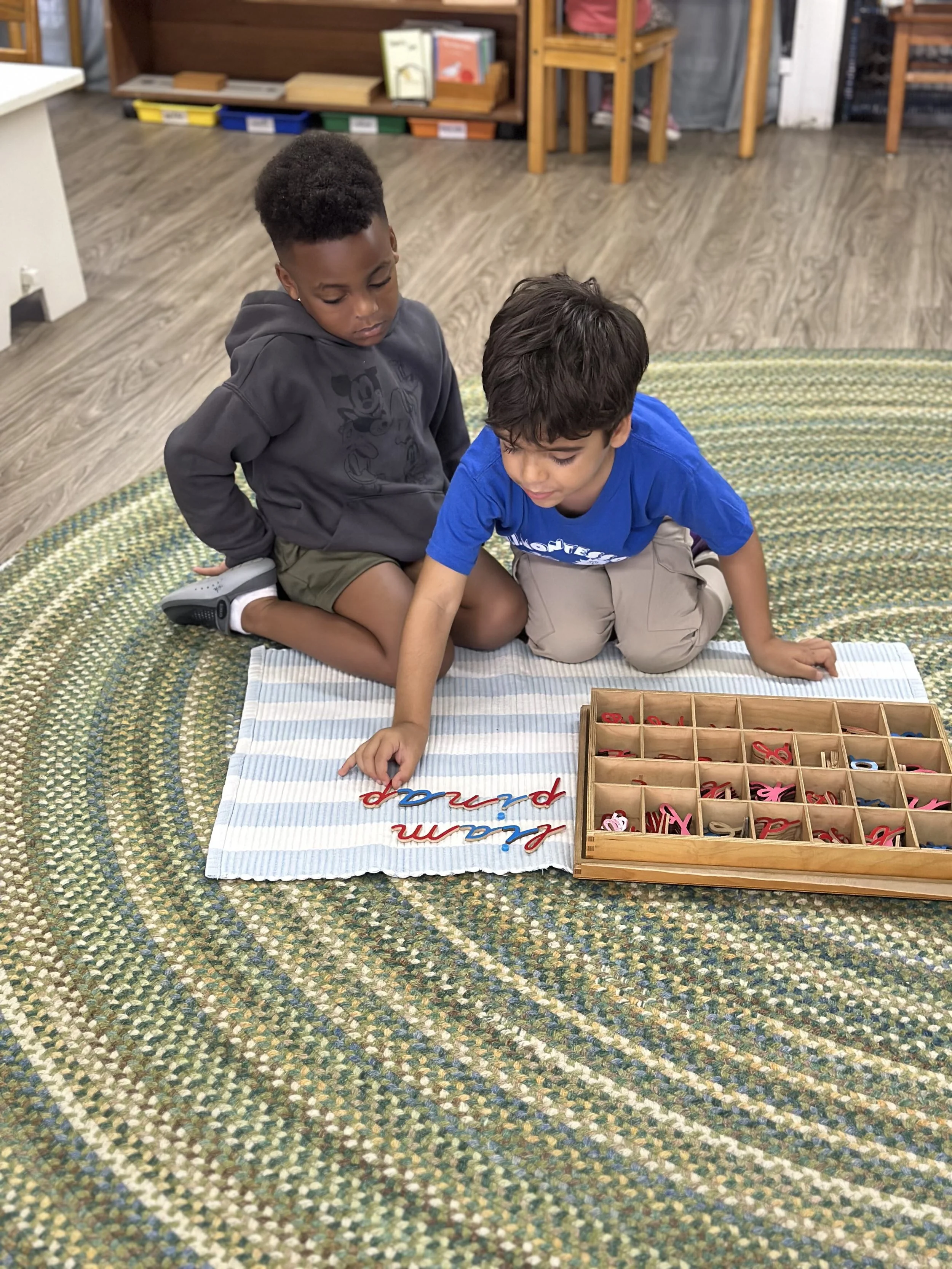
Language is meaningful communication, not merely the ability to read and write, and for the child, every form of communication is significant. Success in reading and writing depends first on spoken language, as children must learn to express their thoughts and feelings before developing literacy skills.
The Primary Montessori Language curriculum addresses Spoken Language, Written Language (both self-expression and mechanics), and Reading, each supported by concrete materials that enable the child to “teach himself.”
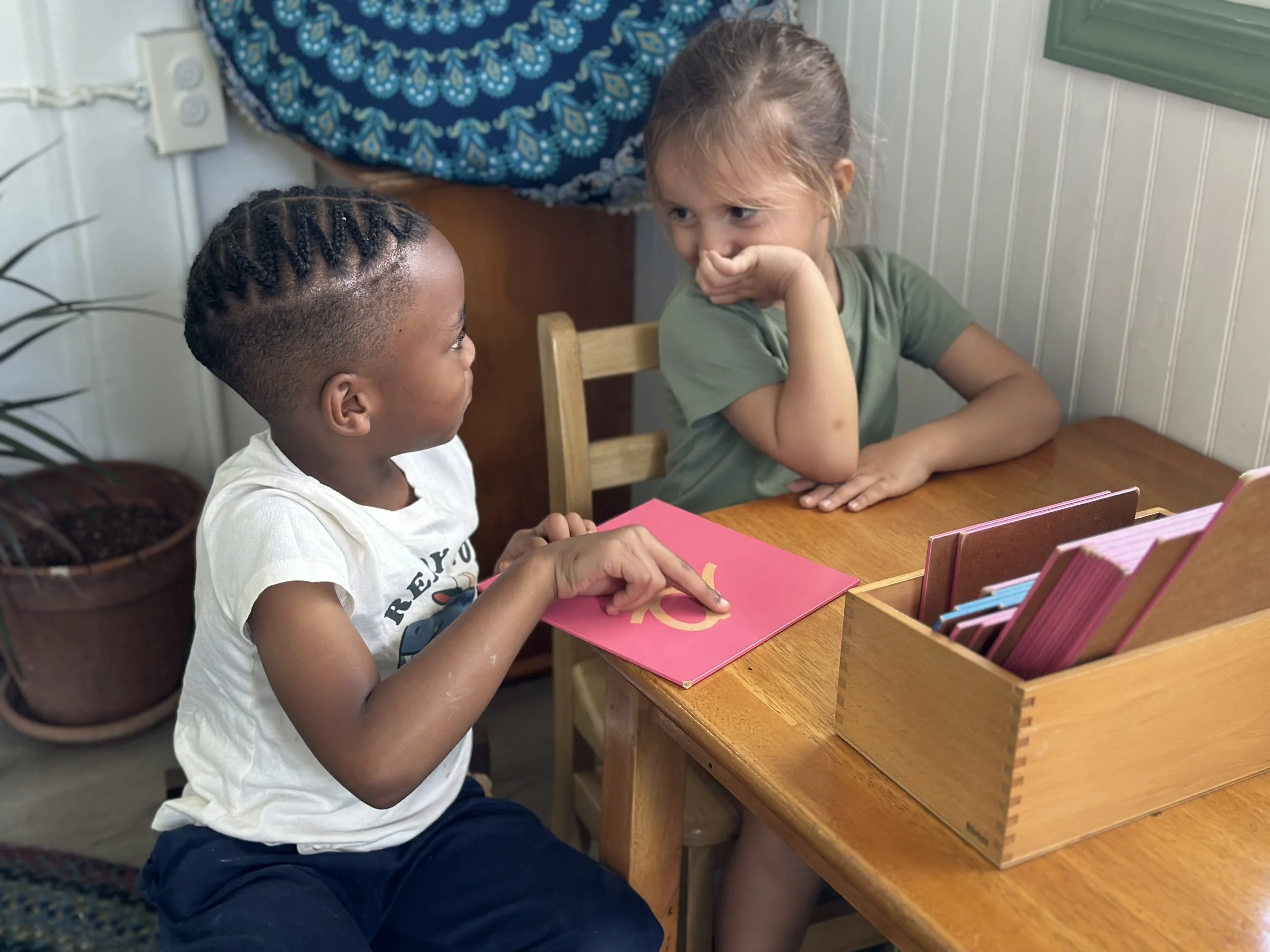
Spoken Language activities include stories, poems, vocabulary cards, and conversation, while Written Language develops expressive and mechanical writing through tools like sandpaper letters, metal insets, and movable alphabets.
In Montessori, reading is discovered rather than taught; once children realize they can read what others have written, they explore phonetic reading cards, phonograms, puzzle words, and simple books, later advancing to grammar, syntax, sentence analysis, and word study.
Grace and Courtesy
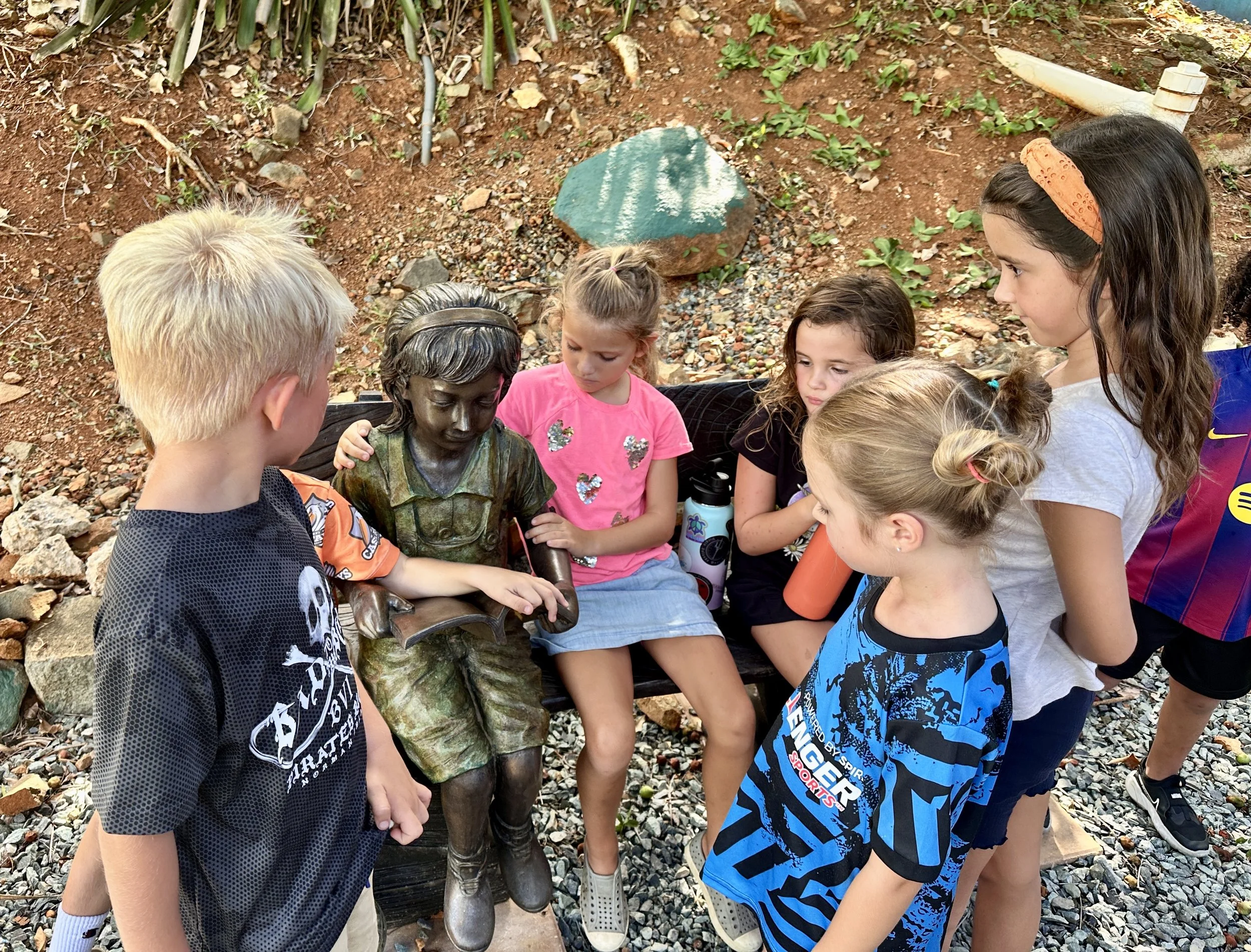
Grace and Courtesy lessons equip children with the skills to move with purpose, act with control, and navigate real social situations, fostering harmony within themselves and with others. These lessons build confidence in the physical environment through purposeful movement and support social development by teaching children how to form and maintain positive relationships.
Whether learning how to carry a chair or how to invite a peer to share snack, children gain ease in both movement and communication, becoming more comfortable with themselves and others. Presented individually or in groups through role play, Grace and Courtesy lessons create an atmosphere of peace, respect, and effective communication in the classroom.
Math
Just as we help refine the senses, we also nurture the mathematical mind through experiences, observations, and exploration. Sensorial work prepares children to perceive size, quantity, sequence, and pattern, forming the basis for mathematical understanding.
In Montessori, math is approached as both a sensorial and language experience, emphasizing concrete comprehension of concepts alongside the “language” of math—for example, ensuring a child not only counts but also understands the meaning of numbers.
The Math area is organized into six groups—Numbers 1–10, the Decimal System, Teens and Tens, Memorization of Math Facts, Fractions, and the Passage to Abstraction—each with precise materials that foster understanding and accuracy through built-in controls of error.
Art
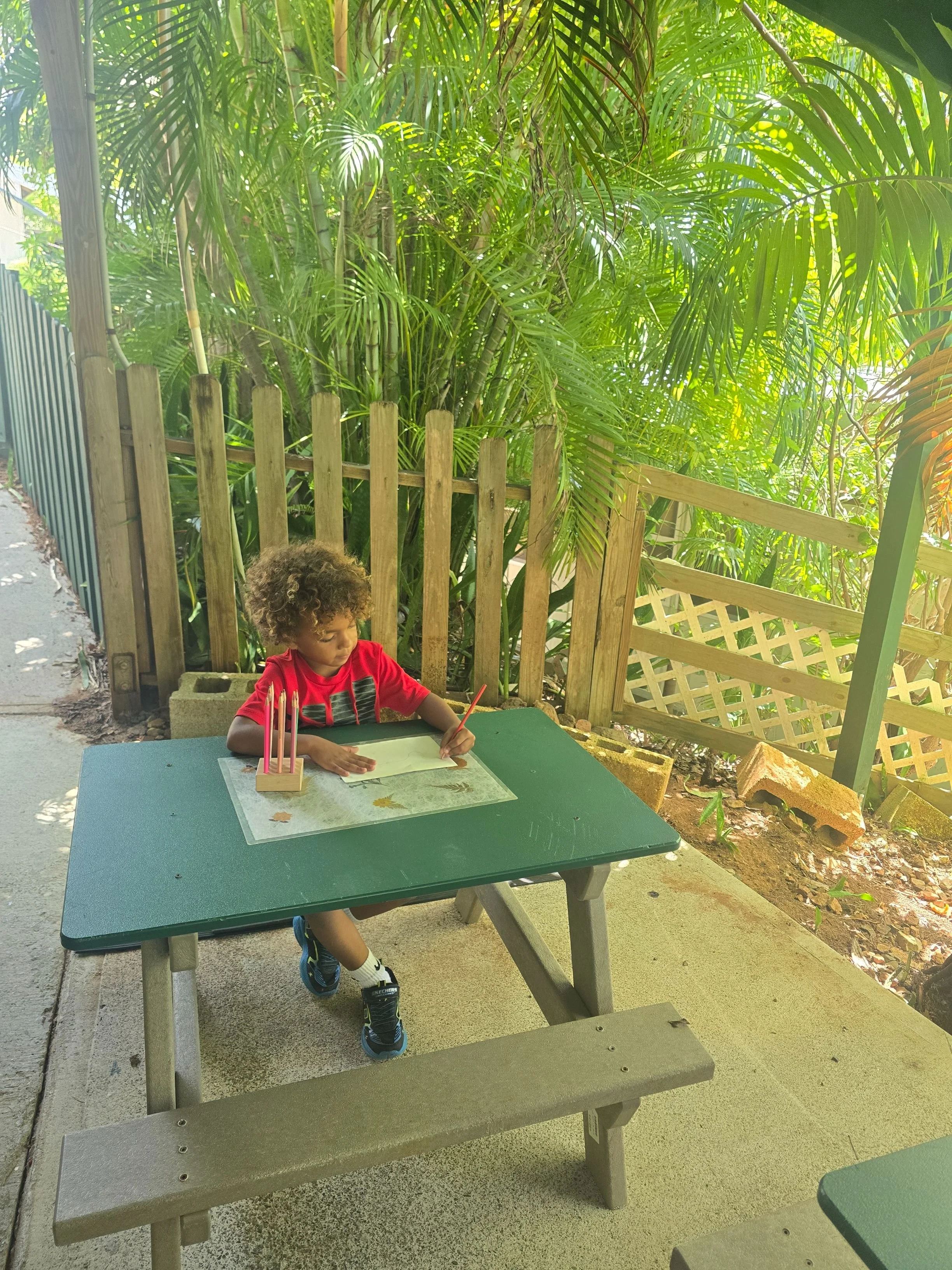
Early art in Montessori serves a similar purpose to Practical Life—refining movement, fostering independence, and building concentration—while also engaging the child’s sensitivity to sensorial elements like size, dimension, and shape.
At first, the focus is on process rather than product, as children practice using tools such as scissors, paintbrushes, clay, or needles, often indirectly preparing for skills like pencil grip.
Around ages 4–6, children begin to care about the results of their work, and art becomes a conscious means of self-expression, often integrated with other areas of learning—for example, sewing a bag, embroidering a design, or illustrating a poem. With ample time and exposure to varied media, creativity flourishes, and children gain both practical skills and expressive freedom.
Music
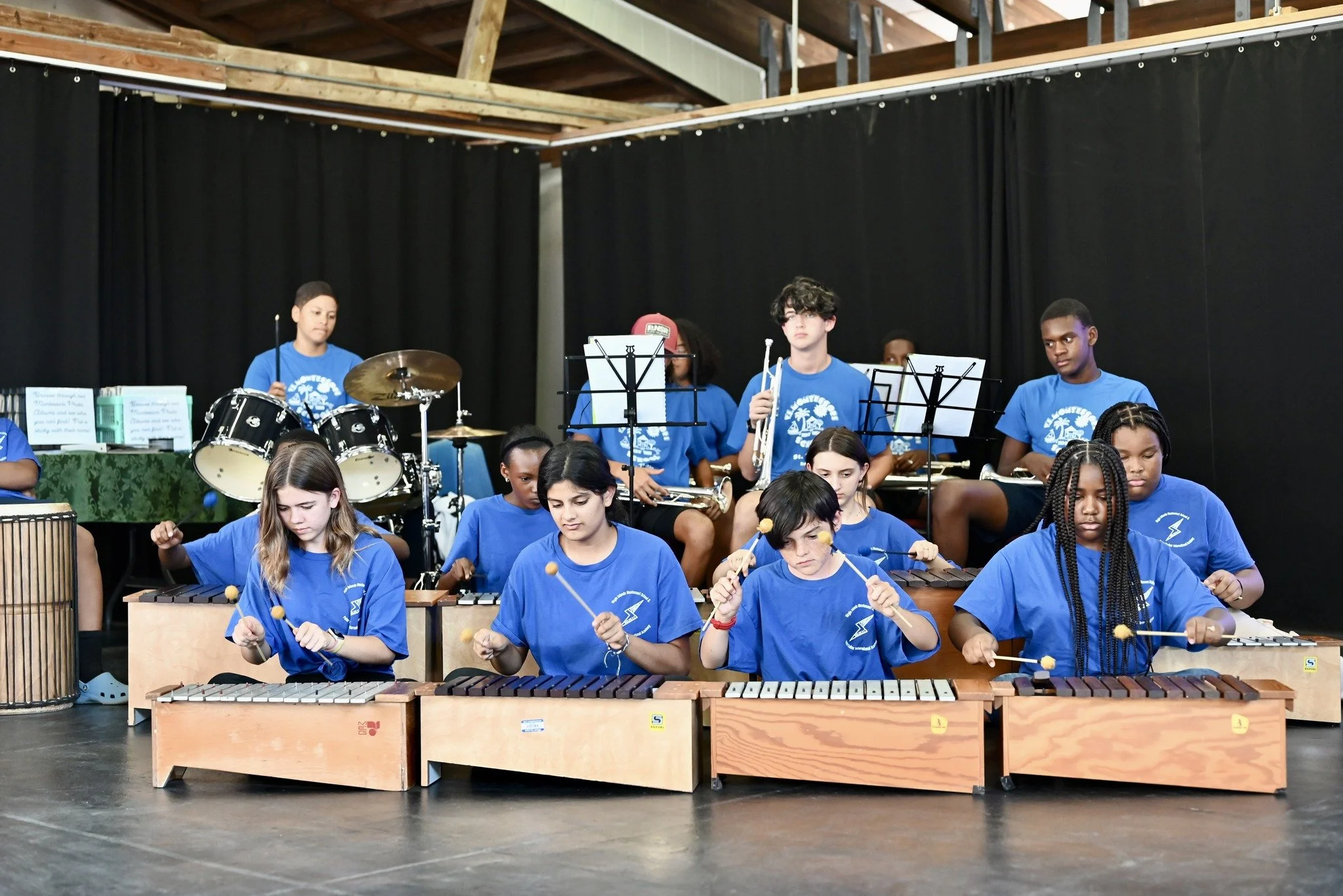
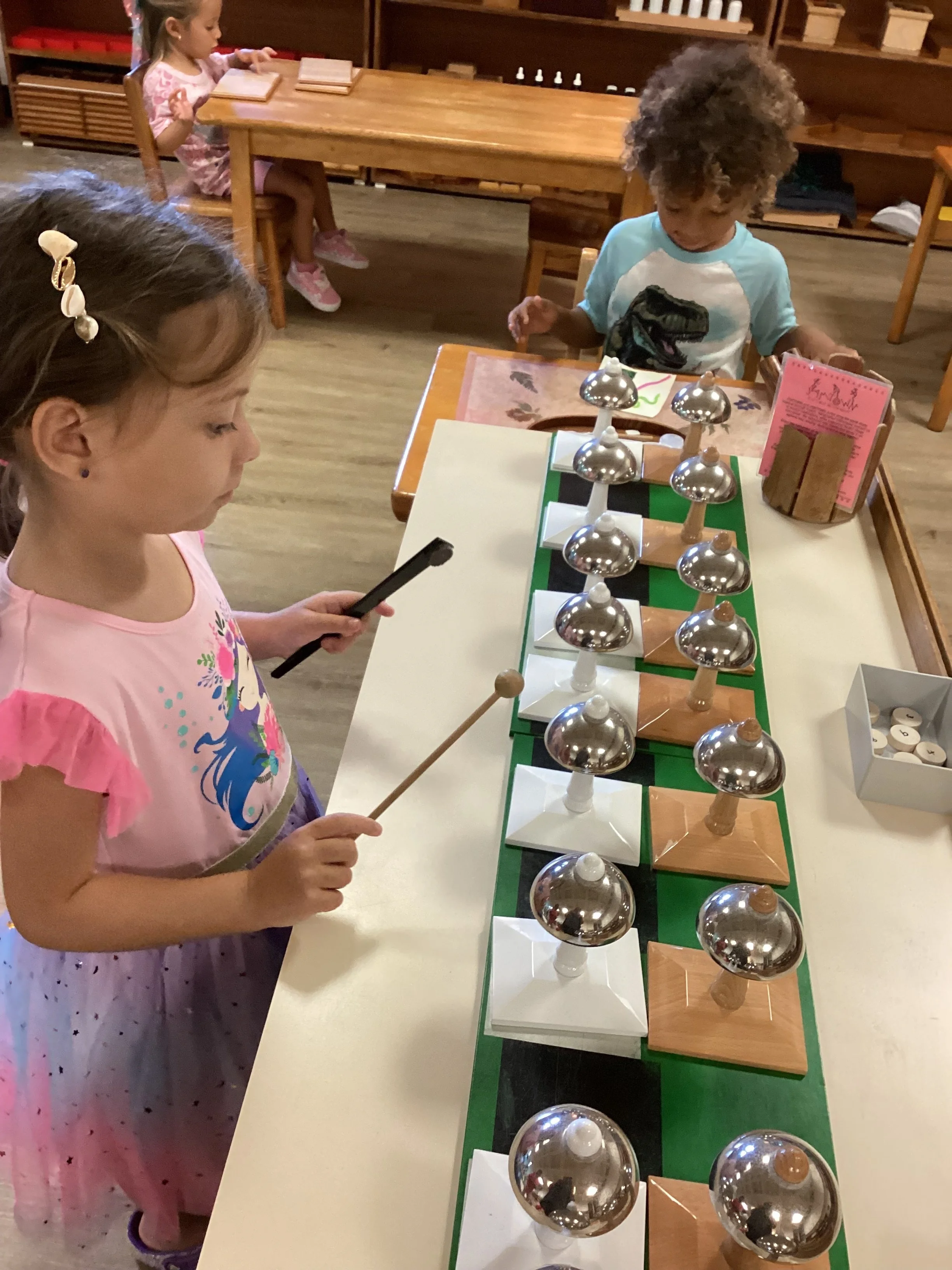
In Montessori, music is part of the sensorial area, offering young children rich and varied musical impressions to refine over time. Through singing, listening to diverse styles, playing simple percussion instruments, and exploring the Montessori Bells, children experience music as a joyful and regular part of the classroom. The goal is for each child to see music as an essential and natural part of daily life.